Dec. 21st : on the way to Philadelphia
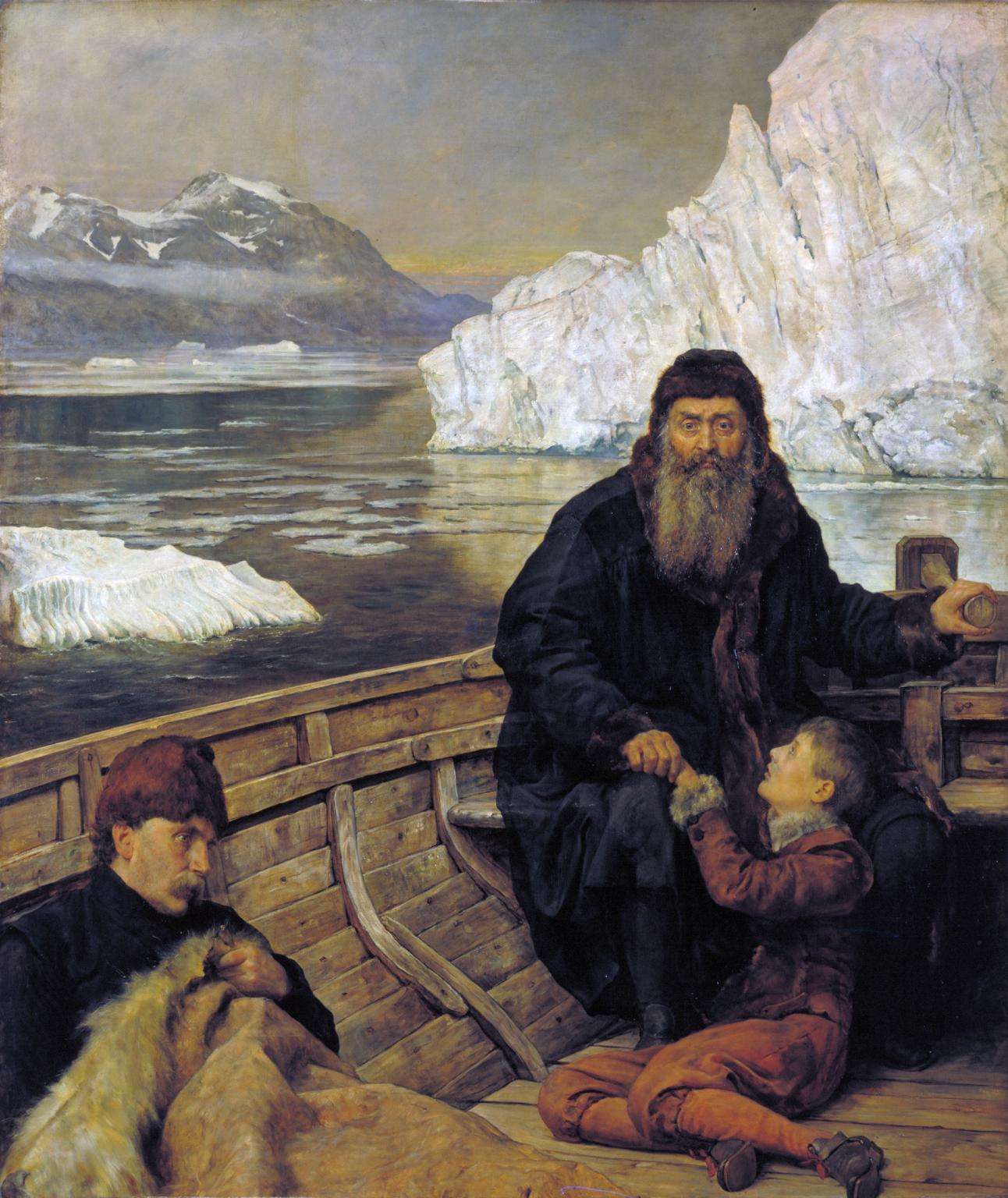
Every time I cross the Hudson, the face of its great explorer appears in overlay before me—wild eyes, beard frozen stiff.
The life of this daredevil, whose name now marks bays and rivers, unfolded quickly between 1565 and 1611, one of those lives made of brilliance and incompletion—meaning that, obsessed with his quest, Henry never actually found what he had set his mind on finding. (Learning about people like this fills me with immense consolation.)
Except that he did find something far greater. By mistake. As often happens. (Even more consolation!)
Henry was English; we know very little about him. We know he was married to a woman named Kathrine, with whom—besides having three children—he must have shared very little, given how rarely he stayed home. But these were times when the ground burned constantly beneath one’s feet. The era in which Europe’s greatest fleets aimed to claim important pieces of the world, hunting for explorers capable of staking those claims in the name of their crown. To reach a point on the globe where no one had ever set foot and give it your own name!

Columbus had been dead for quite a while; exploration was now shifting north. It was strategically essential to find a route to the East that wasn’t blocked by ice. And Hudson wanted to be the one to succeed. Try imagining the boldness and courage required—above all, the wonder that must have come with it: immense, indescribable. And not least, tenacity.
Henry William Hudson made four major expeditions under extreme conditions: two Arctic, two Atlantic. A self-taught sailor, he seems to have learned the craft on his own, boarding—between one child and the next—first with one company, then another.
Finally, in 1607, the Muscovy Company, an English firm, entrusted him with his first major mission: find a route to Asia. Henry gladly accepted and, dragging along his young son and a trusted secretary—his onboard blogger, so to speak—set off on the adventure. He left in spring, heading east, but soon had to turn back because of the brutal weather. A complete failure? Not entirely. He reported, to the disappointment of his funders, that he had spotted abundant whales—information he knew would soothe some tempers and reassure investors about future hunts and trade.
Then came the second voyage—worse than the first. He barely managed to reach the Arctic Ocean and a small cluster of Russian islands before turning back once again, defeated by impenetrable ice. In 1609 he enlisted with the Dutch East India Company as a commander. At the helm of the Half Moon, with the same obsession—find a passage to Asia. He headed toward Russia… and again, the damned ice blocked the way.
But this time he refused to go home (to do what?! Have another child? Nooo…).
No, this time he turned the opposite way—he sailed west, dodging destiny, a bit like when you’re in a rush and the Aurelia is jammed, so you try the Variante instead (!)—except here we’re talking about Poles and northern seas, Atlantic rather than Pacific oceans.
It seems Henry had heard of the route taken by John Smith (yes, Pocahontas’ John Smith—though Henry was no ladies’ man; his obsessions were of another sort, other passages he wanted to explore (!)).
So he headed toward North America, and in early July arrived in Nova Scotia, Canada. He met the local Natives and established peaceful relations with them (“The natives are a peaceful, quiet people,” he would say. “When we departed, they broke and burned their bows and arrows, fearing we might be afraid of them!”).
He sailed down the coast to Chesapeake Bay, then veered back north, hugging the shore all the way up to the bay of New York—already explored by Verrazzano in 1524—where he suffered a loss at the hands of the Indians and had to bury one of his men.
But he didn’t stop.
He decided to follow the river that would be his doom, but would immortalize his name forever.

As I’m telling you this story, I can feel a fever rising—my cheeks on fire, my body aching. Now nausea joins the party, and even a touch of cystitis, just delightful, considering there’s still an hour to go before reaching Philadelphia… It’s in moments like these that thinking of the greats helps. I imagine Henry trying every possible gesture to explain his plan to the Natives, with the limited help of whatever interpreter he had. I picture him waving his arms, trying to make them understand he needed help, while his crew had absolutely had it with this legendary passage everyone kept blabbering about. And he knew it. He knew they wanted to go home. And they were certainly not in a benevolent mood.
People like Henry are my lighthouses: the ones who never give up, who don’t surrender when pressured by cowards and opportunists trying to dissuade them, to make them feel wrong or crazy; the ones who hear: “Why bother? You have a salary, behave yourself, forget glory, forget dreams, drop the ax!”
But it was time to return. The passage hadn’t been found, but the outcome was far from disappointing: a new trade post had been secured. Verrazzano had merely passed through; Hudson worked to stay, to establish the first true—and peaceful and profitable—trade with the Natives of Manhattan, which thanks to him would briefly be called New Amsterdam.
But someone was waiting for him back home—someone not too thrilled that an Englishman was bringing glory to another country. His compatriots intercepted him before landing:
“How dare you sail seas and bays and rivers in the name of another crown? Exploration is forbidden unless done for His Majesty. If you wish to continue exploring, fine— but you must do it for us!”
These are the situations where compromise reeks—yes, intolerably so—but still remains bearable in the name of the ultimate mission: the passage. That damned Northwest Passage had to be found.
On April 10th, 1610, Henry Hudson’s fourth and final voyage began. Aboard the Discovery, once again with his son John and his friend and blogger Juet, he crossed the Atlantic and headed north to Greenland—skirting it, rounding it—then toward Canada, passing through the strait that would later bear his name. Once inside what would become “his” bay, he realized there was no exit. He was trapped among glaciers, supplies running low. Grumbling spread among the crew; these were hostile, brutal waters, testing them all. Hudson wisely decided to wait for the thaw—but only so he could continue the quest. Giving up was not on the table. The passage! That damned passage was all that mattered.
By June the ship could move again, conditions had improved, but at that point the dream shattered: the crew mutinied. The faithful onboard blogger, Robert Juet, sided with the mutineers, and the final decision was terrible: Henry, his son John, and a couple of others would continue the exploration alone—adrift. Forced into a small boat, they were abandoned at sea for one last voyage with no return. Nothing more was ever heard of them. The companions, once home, were charged with murder and brought to trial—then all acquitted.
The wake of Henry William Hudson would never fade: his example and his desperate trials would guide future generations in their search for passages to elsewhere.

Alì grida che siamo arrivati a Philadelphia, e la gente comincia a recuperare i bagagli e le giacche, io più morta che viva riemergo, provo a alzarmi ma le gambe mi pesano una tonnellata ciascuna.