From Covid queues to Marathon Avenue, chasing Macondo in Greece.
Too bad no one knows where this place is, the one I keep pronouncing like the city in New York State. I pass a couple of Covid queues, people lined up in masks—I can’t figure out for what—then I spot the Tourist Info guy, face uncovered, one face one race, and I dive straight in. Parakaló, parakaló, he smiles, but he doesn’t know it either.
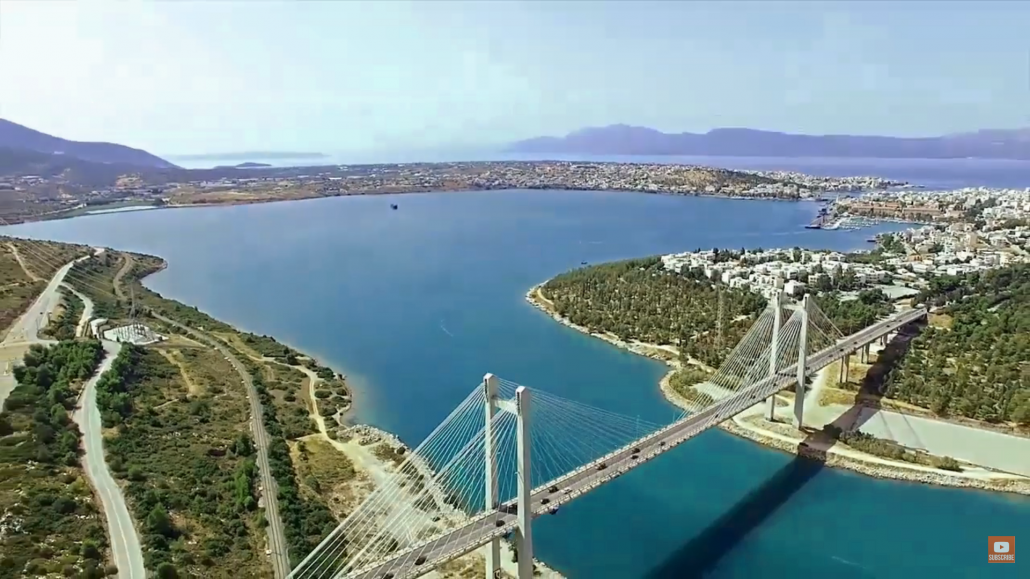
He’s never heard of this kind of Macondo—so my weakened imagination paints it—a fishing village that escaped progress and the claws of Covid, with the added bonus of the sea (and Wi‑Fi).
Spyros suggested I take the Evia Shuttle, three runs a day: morning, afternoon, evening. Too bad he told me half an hour ago, when tickets had to be booked—online only—at least 24 hours in advance. I’m torn about renting a car, as the Tourist Office guy advises, but the afternoon is nearly gone, and he can’t give me precise times or details on how to reach the other shore (from Athens I need to get to the red dot). And the 23rd of the month is still far away.
Besides, I have a special knack with taxi drivers—I could write a separate blog about it—but not to bore my countless followers, I’ll just re‑share the Uber ride to Union Station in Washington, back in December 2019, in the middle of the SARS‑Covid‑19 flu crisis (I’m always ahead of the times). I was giving a hard time to a Vietnamese cabbie who had renounced his roots for a car of his own, a fistful of dollars, and tons of junk food.
My Hellenic Virgil, driving and fiddling with skill, is called Alexandros. He’s about forty, more up than down, and must have smoked a mega joint after his last ride because the taxi is saturated with cannabis. His English is shaky—he says sciorri, sciurri, boh, sounds Greek—but luckily he’s got an ace up his sleeve, or rather, in his smartphone.
Now, as a language teacher I shouldn’t really say this, but I can’t help praising Google Translate—and the lady downstairs who introduced me to this formidable app in Jerusalem. After a painful knee sprain, climbing down from the bunk bed in the hostel, she saw me limping and practically fixed me with some peculiar moves to “unblock my clogged meridians,” her words. With Google Translate as accomplice.
But back to my marathon. Yes, because look at what we’re driving along: me gripping Samantha of Google Maps, Alex with Jessika of Google Translate. Introductions made, off we go—between a ringtone, a sip of Coke, and a notification, signals and announcements, turn here, swerve there. After twenty kilometers we can relax, and just like that we’re chatting about ancient history, family, Covid, and the economy, while speeding along none other than Marathon Avenue, folks—the very road once run by the herald Pheidippides.
We talk about the role of women (woman, woman—yes, it’s clear his idea of woman matches that of the ancient Greeks, and frankly, a bit mine too). “Women must raise children,” he says. That’s why he’ll drive endlessly to and from the airport all summer while his wife and kids are at the seaside. I tell him his wife is lucky, and he nods, while Samantha firmly insists that a woman’s place is by the hearth. Zan, zan!
We settle on 50 euros—and a bit of English training he badly needs, he says. And since Jessika announces there are 33 minutes left before the next boarding, I beg Samantha to ask her master to step on the gas or I’ll miss the ferry.
(to be continued…)