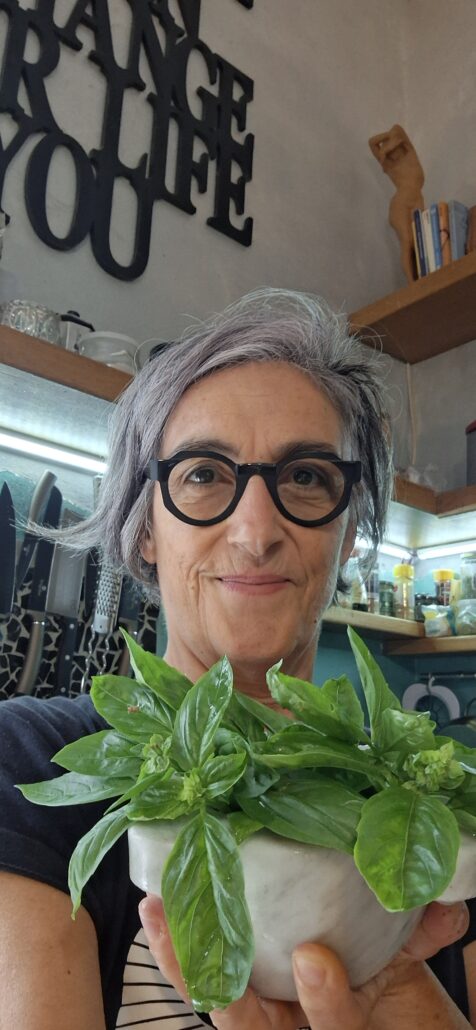
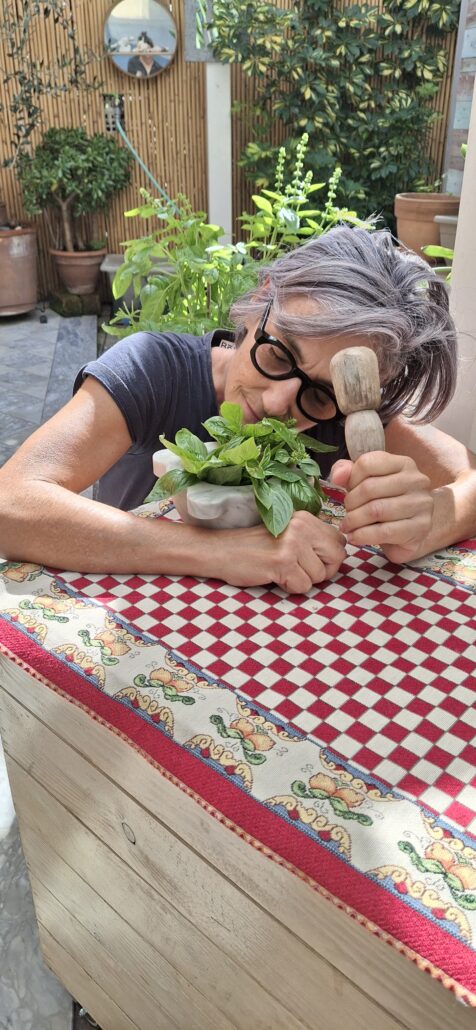
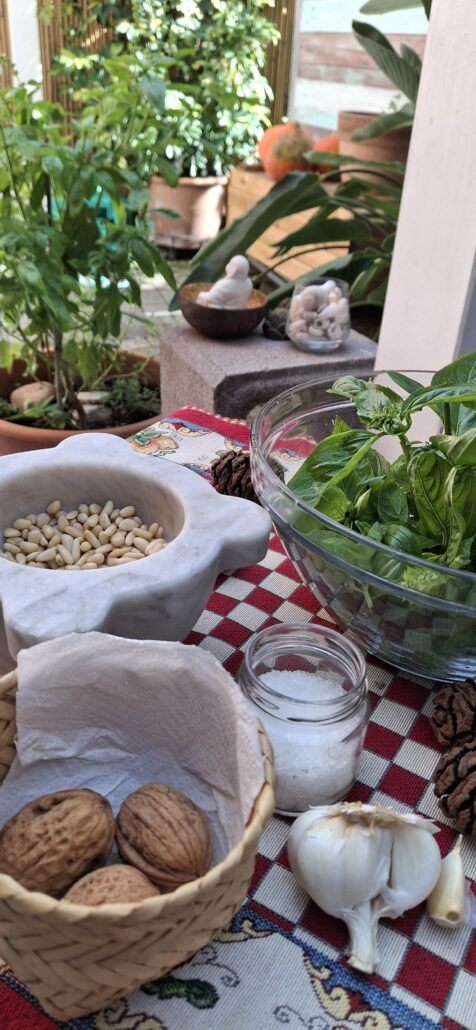
Indeed it does look like guacamole, but, hey: no! In ancient Rome, moretum would have been served as part of a simple meal, often alongside flatbread or rustic loaves made from wheat. The dish pairs beautifully with flatbread, which acts as a perfect vessel to scoop up the creamy, herb-infused spread. For a more authentic experience, serve it with a side of olives or fresh vegetables, much like the Romans would have done.
Virgil (70–19 BCE) was one of ancient Rome’s greatest poets, born in northern Italy during a time of profound political and social change. Deeply connected to the land, he celebrated rural life and its simple, meaningful gestures.
His Bucolics (or Eclogues), written in the 1st century BCE, are pastoral poems that portray farmers and shepherds in an idealized countryside, where work, nature, and daily rituals — even preparing a humble meal — become moments of poetry and reflection.
In the excerpt below, from Moretum (Appendix Vergiliana), Virgil describes a quiet morning in the life of a farmer. Before heading to the fields, he prepares his humble meal: bread and moretum, a rustic paste of herbs, cheese, garlic, and olive oil, crushed slowly in a mortar.
He sprinkles grains of salt upon it, and when the salt is crushed, he adds hard cheese and the herbs already named. With his left hand he steadies the mortar against his leather-clad thigh; with his right he first pounds the fragrant garlic, then grinds all together, blending their juices.
As his hand circles, little by little the separate elements lose their own nature; many colors merge into one— not wholly green, because the bits of cheese resist, nor white as milk, because so many herbs give it hue.
Often the sharp scent strikes his open nostrils, and he curses his meal with wrinkled nose; often he wipes his streaming eyes with the back of his hand and hurls insults at the blameless smoke.
The work goes on: the pestle no longer rises and falls, but moves steadily in slow circles. He pours in drops of Pallas’ olive oil and the fragrance of a very little vinegar; again he mixes and turns it all.
At last he runs two fingers round the mortar’s rim and gathers the scattered paste into a rounded ball, which now has both the name and form of perfect moretum.
Per fornire le migliori esperienze, utilizziamo tecnologie come i cookie per memorizzare e/o accedere alle informazioni del dispositivo. Il consenso a queste tecnologie ci permetterà di elaborare dati come il comportamento di navigazione o ID unici su questo sito. Non acconsentire o ritirare il consenso può influire negativamente su alcune caratteristiche e funzioni.
Funzionale
Always active
L'archiviazione tecnica o l'accesso sono strettamente necessari al fine legittimo di consentire l'uso di un servizio specifico esplicitamente richiesto dall'abbonato o dall'utente, o al solo scopo di effettuare la trasmissione di una comunicazione su una rete di comunicazione elettronica.
Preferenze
L'archiviazione tecnica o l'accesso sono necessari per lo scopo legittimo di memorizzare le preferenze che non sono richieste dall'abbonato o dall'utente.
Statistiche
L'archiviazione tecnica o l'accesso che viene utilizzato esclusivamente per scopi statistici.L'archiviazione tecnica o l'accesso che viene utilizzato esclusivamente per scopi statistici anonimi. Senza un mandato di comparizione, una conformità volontaria da parte del vostro Fornitore di Servizi Internet, o ulteriori registrazioni da parte di terzi, le informazioni memorizzate o recuperate per questo scopo da sole non possono di solito essere utilizzate per l'identificazione.
Marketing
L'archiviazione tecnica o l'accesso sono necessari per creare profili di utenti per inviare pubblicità, o per tracciare l'utente su un sito web o su diversi siti web per scopi di marketing simili.