Let’s pause for a moment the story of how I managed to get to Euboea, and look instead at how, centuries ago, I came away from it.
The story I’m telling you today—I don’t know if I’ll manage to finish it before I die. With the way things are going, I don’t have much hope. Not because I’m sick. No, no—I’m perfectly fine. It’s the times themselves that are unhealthy for me, and for my whole story.
So I’ll write just a small piece of it. Just the beginning. Which starts on the shores of this fascinating island stretching out in front of Attica. An island that I believe sealed my fate as a nomad, a permanent resident of elsewhere.

The first time I heard about my origins was in elementary school. The teacher was explaining the Greeks, and I began weaving my maternal genealogy—tracing my mother in a straight line back to the Sicani on my father’s side, and to Magna Graecia on my mother’s.

Obviously, I made most of it up myself. No one at home knew a damn thing. But the teacher—I trusted him. I listened, spellbound, as he told us about the Chalcidians who, around 700 BC, founded Messina, ancient Zancle.
That’s when it emerged that I had a Sicilian grandfather who resisted Sican colonization, descended from the people who were the first to notice that this island had three very convenient points for landing—and mountains of fertile soil just waiting to be worked.

And a maternal grandmother who came from a Greek island in the Aegean Sea, facing Attica, inhabited by an Ionian people who colonized Sicily for trade—mainly to control the metal routes toward Etruria. (And guess where I live now?)

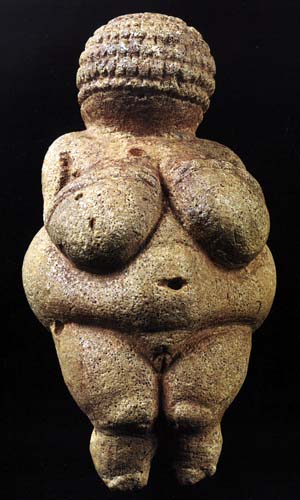
Turns out Peppa had commerce in her blood. A true businesswoman, my Hellenic grandmother. She looked uncannily like the Mother Goddess of Willendorf—though motherhood itself never sat too deeply in her belly. Peppa was better at warding off fear and practicing majarìe, folk magic—coming as she did from a culture steeped in myth and spells. And she was also an exceptional seller of tumazzu, passito wine, and ricotta.
Her empire was a tiny grocery shop infested with mice, with a porthole-sized window. There was no refrigerator. In winter, perishables hung outside the window; in summer, they went into the fridge at home. Sometimes she’d sell customers already-started slices of cheese. Often they didn’t notice. Or if they did, they never complained. In ancient Alontion everyone knows everyone—it’s like being part of one big tribe. And if anyone dared complain, she’d snap back: “What’s wrong with this tumazzu?”
At fifteen she was already married to Turi, whose sweetness could rival white mulberries. One day she spotted him returning from the fields and decided that boy would do. Without wasting time, she went straight to his mother, Donna Concetta, and gave her four possible wedding dates—let them choose. She’d provide the house and everything else.
Turi was informed at the very last minute. Being a good man—calm, gentle—he agreed. He had nothing to lose. His answer was simply: “Gnorsì.”
At sixteen came the first child, Ἰωσήφ. Then quickly the others: Βασίλι, Γκραζία, and Μαρία—my mother. The youngest. And the unluckiest. As often happens to those who stray from their destined path, ending up either cursed with terrible luck or blessed with unbelievable fortune. Little Maria got neither.
They married—he tall and thin, she short and round. Over the years she grew very large, magna, a detail that more than any other strengthened my investigation, convincing me that my family and I were true leftovers of Magna Graecia.
And that if there is a land I can—and must—return to, it is Euboea.
But first, maybe we should figure out how to get there.